“Use the Difficulty:” The Quiet Rhythm That Shaped Me
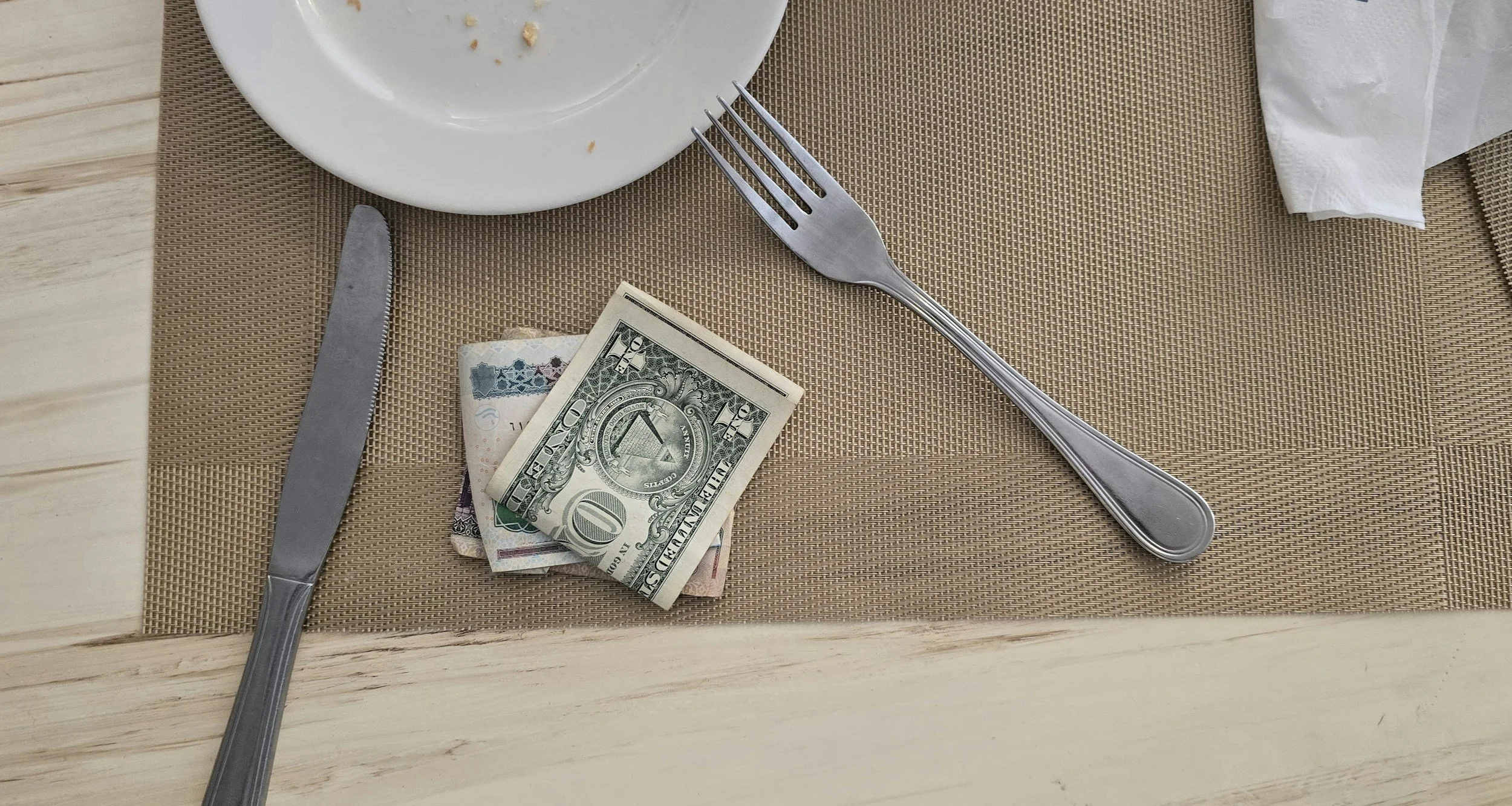
Every morning before school, my dad left lunch money on the table for my brother and me. Nothing fancy. Just there. Every day. At the time, I didn’t think much about it.
He was raised by a single mom in Pittsburgh in the 1950s. He never met his father and didn’t have much. No one was leaving anything on the table for him.
He found mentorship at the Boys & Girls Club. He worked his way through high school, found scholarships to put himself through college. He was drafted into Vietnam, served, and made it home safely. He continued on to graduate school and spent the rest of his career working with struggling kids - juvenile delinquents - helping them get back on their feet. He survived his own circumstances and reached back out to help change someone else’s trajectory.
Later, he faced a different kind of war, the quieter kind that lives in hospital rooms and long silences. He lost his wife, my mom, to breast cancer in his late 30s. None of it was easy, but he made a decision, over and over again, to move forward and use life’s difficulties.
Years later, that lesson came back in a way we didn’t expect. My dad, who had already survived war, loss, and rebuilding, would hear that his daughter carried up to a 90% lifetime risk of the same disease that took his wife.
Another moment of tension that settles into your chest and asks you a life-altering question: what will you do with this?
I shared part of this story on the TEDx stage. But some scars are invisible and live just beneath the surface in the form of fear and uncertainty.
What I had learned was this: we don’t wait for life to get easier. We decide how to meet it. That lesson was modeled for me over a lifetime by a man who built his life from nothing, walked through war, buried the woman he loved, and kept showing up anyway, as best he could.
So, when I stood on a baseball field in Pittsburgh as the only girl on a boy’s team, nervous and unsure if I belonged, he had already made that decision for me. He signed me up anyway. I learned to use what felt uncomfortable instead of running from it. I stayed. I worked hard. And became an all-star.
When life came back on a much deeper, more personal level, I recognized the moment and chose to act. Then I rewrote its meaning and became something stronger because of it. When I look back now at my visible and invisible scars, I see the same pattern. A quiet kitchen. A table. Something small waiting there.
Ultimately, that lunch money was discipline, love, and survival. It was a man saying, without words, that no matter how hard life gets, I will show up. That’s what I carry with me now into rooms where I may still be the only one, and into moments that test everything I think I am.
The Phil Collins song, “In the Air Tonight,” captures this tension perfectly. It starts quietly. Almost still. Then it builds tension. There’s something unresolved beneath the surface. For a while, nothing happens. It just holds you there. And then, the drums hit - that iconic, cascading drum fill. The song breaks open. The tension releases.
That’s what difficulty feels like. That space before the decision. My dad lived in that space, again and again, and chose to show up anyway. So have I. And so have you.
We learn to use the difficulty. Because on the other side of tension is who we become.